Safety Center · Chimney Cleaning
Why chimney cleaning matters and when you need it
Regular chimney cleaning and sweeping is one of the most straightforward forms of home maintenance a fireplace owner can invest in — and one of the most consequential when it is skipped. Here's what a sweeping involves, why creosote is the primary concern, what signs indicate your chimney needs attention, and how often different systems should be cleaned.
What is creosote, and why does it matter?
The reason a dirty chimney is so dangerous comes down to creosote accumulation. Wood-burning systems produce creosote as a natural byproduct of combustion. It comes in several forms — from flaky and powdery to tar-like or hard and glossy — and in every form it is highly flammable. When creosote accumulates without being cleared, the risk of a chimney fire increases significantly. Some chimney fires are slow-moving and quiet while others are loud and dramatic, which means they can occur without the homeowner being immediately aware.
Regular sweeping and inspection is the single most effective way to prevent a chimney fire.
That's why a sweeping and a Level 2 inspection go hand in hand — the sweep clears the buildup, and the inspection confirms nothing was hiding underneath it.
The three stages of creosote
Stage 1 — Powdery deposits
Everyone who properly operates a wood-burning fireplace will experience this first degree of creosote. It presents as black powdery dust and, when a chimney is well-maintained with regular cleanings, it does not pose a significant problem. It is usually removed easily with a rotary power sweeping brush during a standard sweep.
Stage 2 — Tar-like buildup
This mid-level accumulation is sometimes referred to as “biscuits” by technicians, and implies one of two things: either there is a more significant issue with the unit, or it is the result of operator habits such as burning wet wood or running low, slow fires.
Stage 3 — Glazed creosote
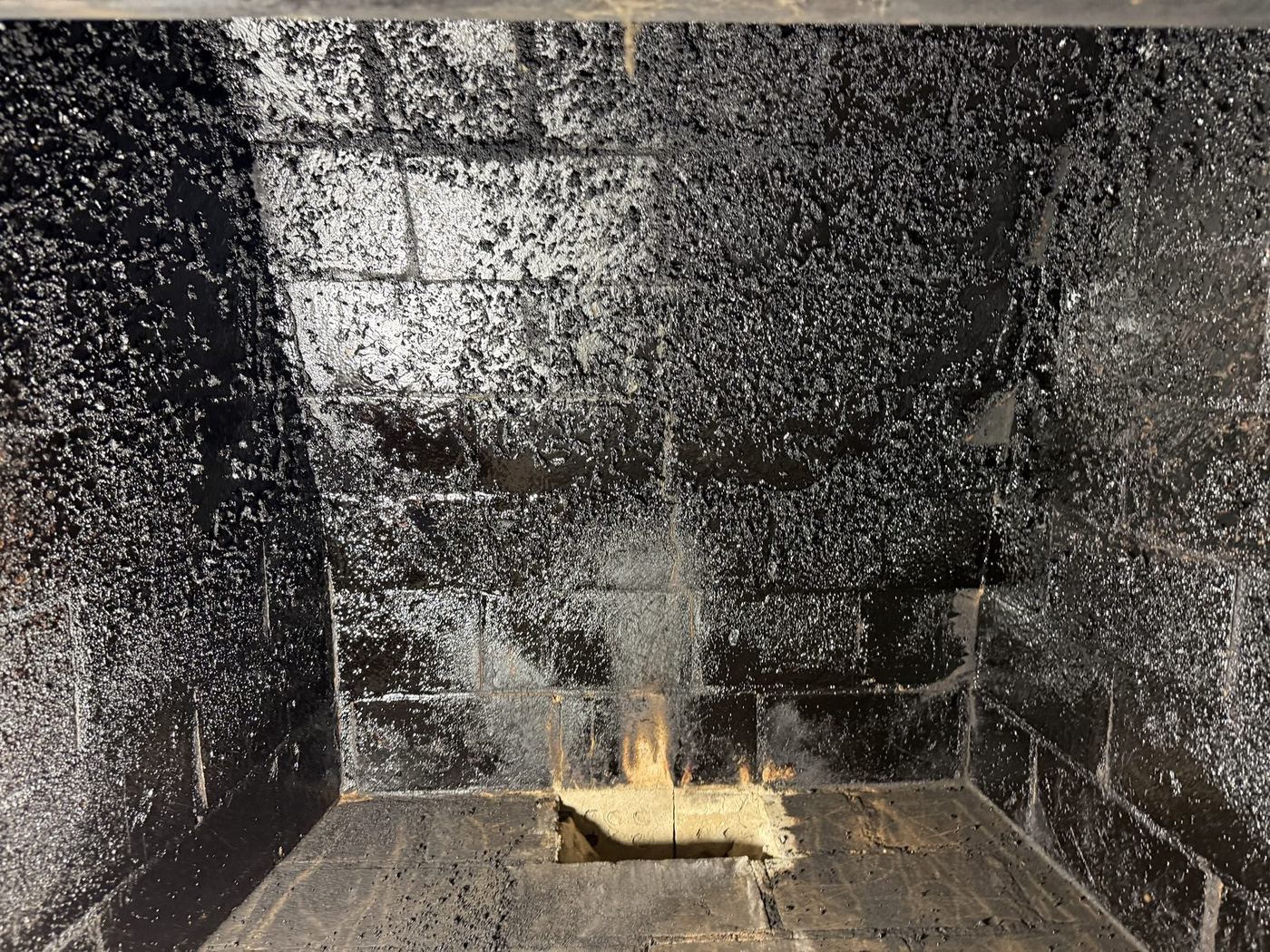
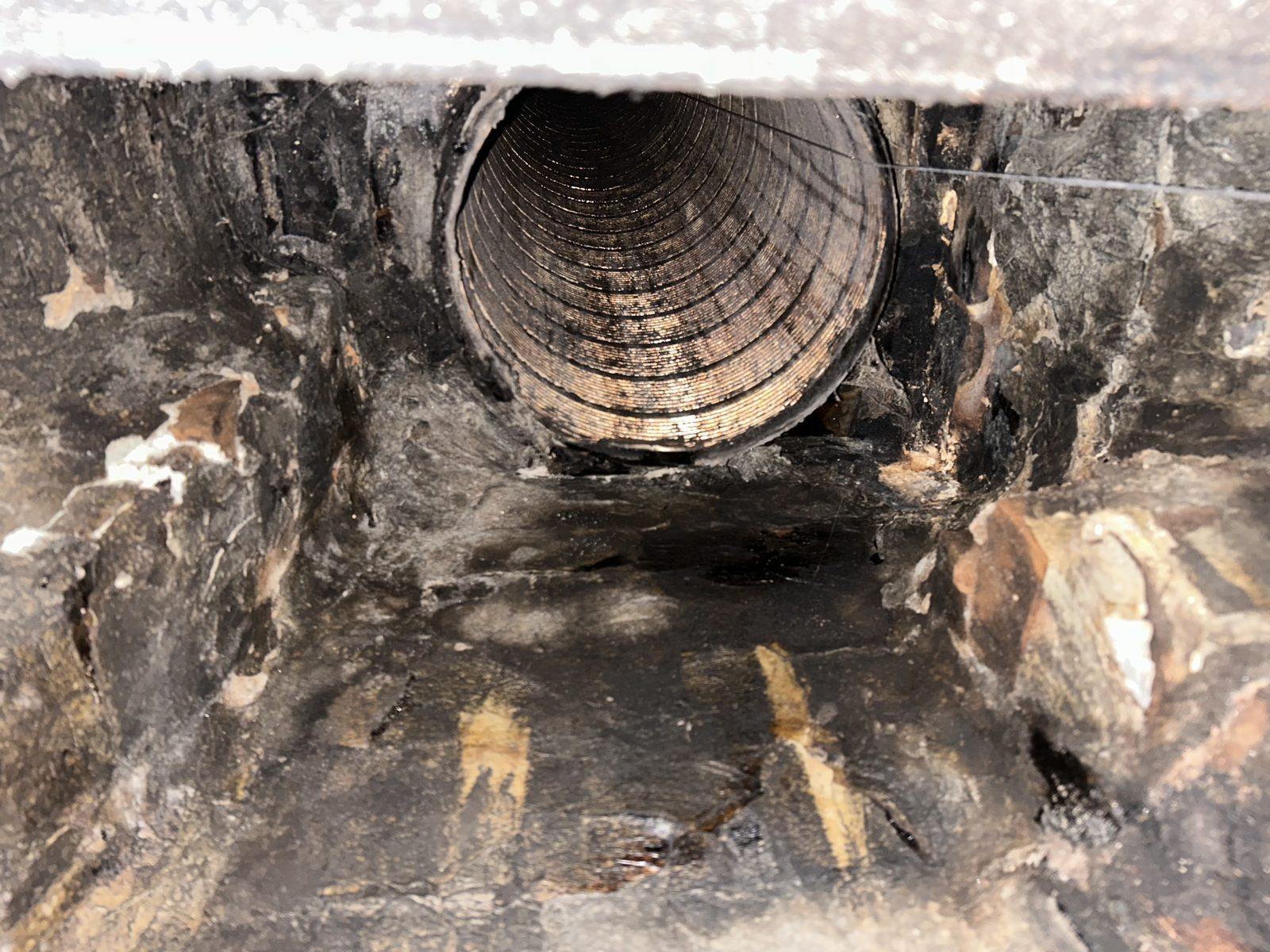
Third-degree creosote is a dense, solid material and the most dangerous form. Standard sweeping brushes are not sufficient to remove it. At this stage, PCR chemical treatment may be used — though the most reliable long-term solution is often a complete chimney relining.
What causes faster creosote buildup?
Certain burning habits and conditions accelerate creosote formation. The most common contributing factors are:
- Burning unseasoned or wet wood (moisture content above 20%)
- Restricted airflow or a partially closed damper
- Overloading the firebox
- Low, slow-burning fires that reduce flue temperature and increase smoke residence time
- Not scheduling a professional sweeping at least annually
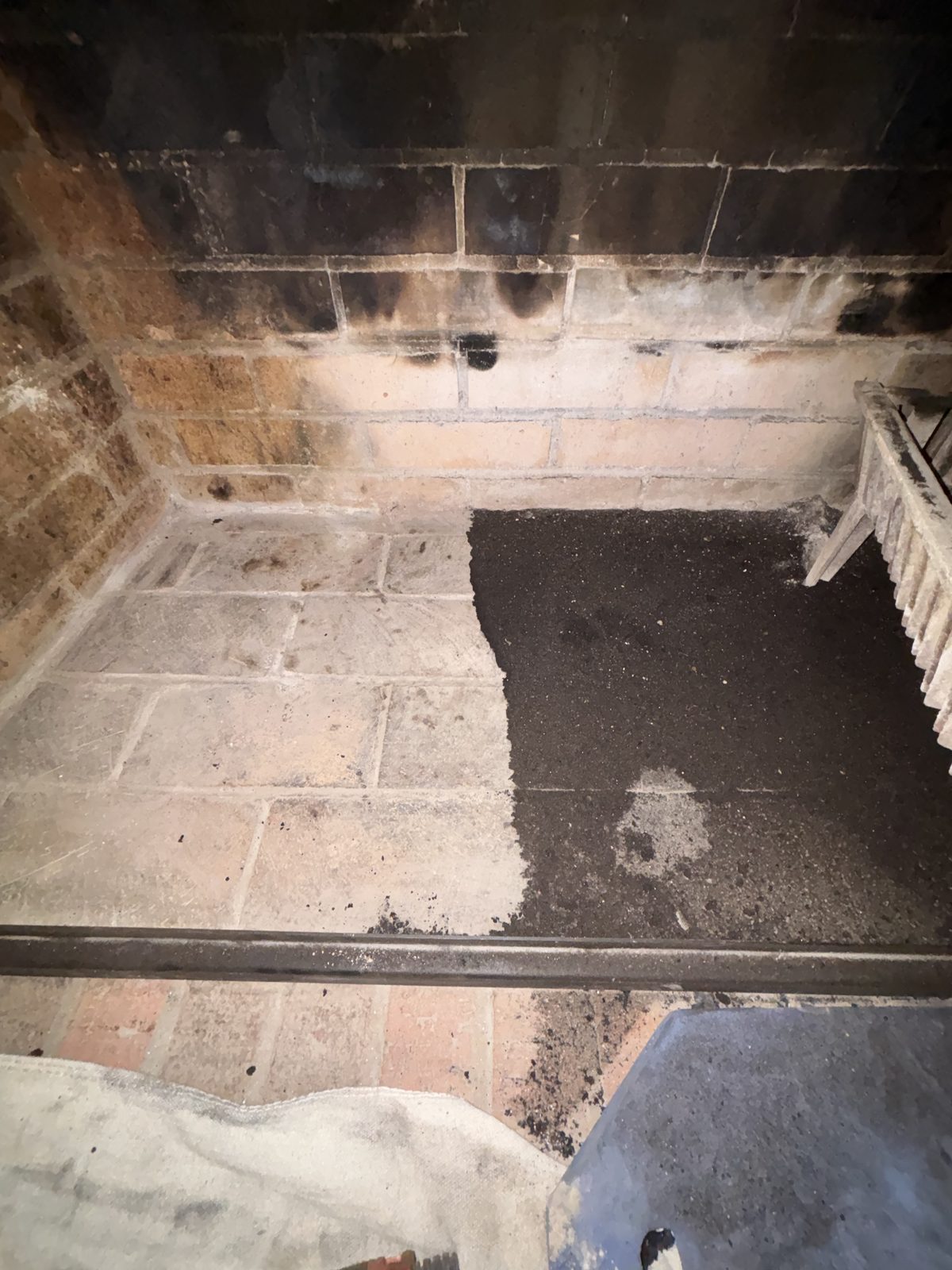
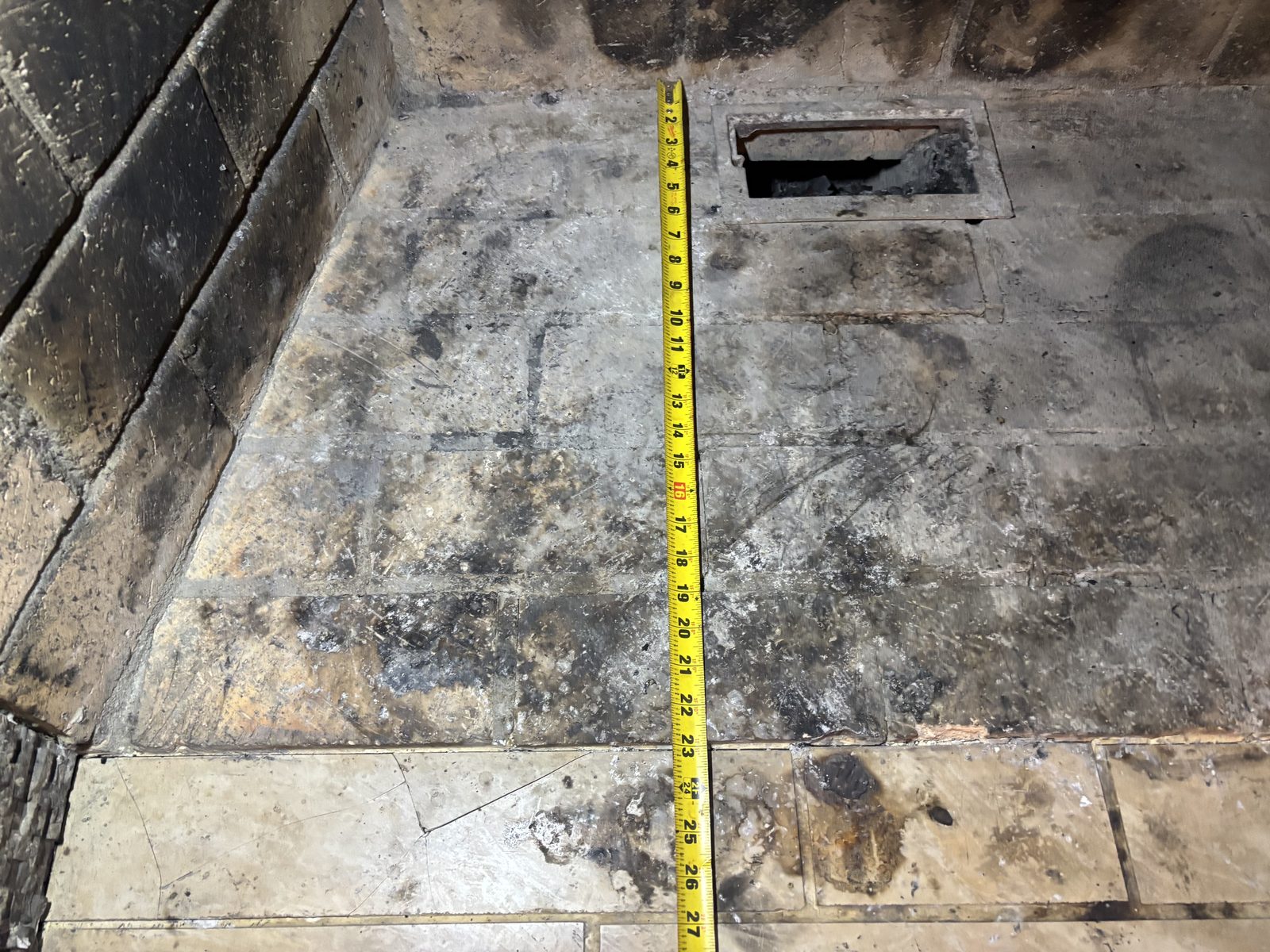 After cleaning
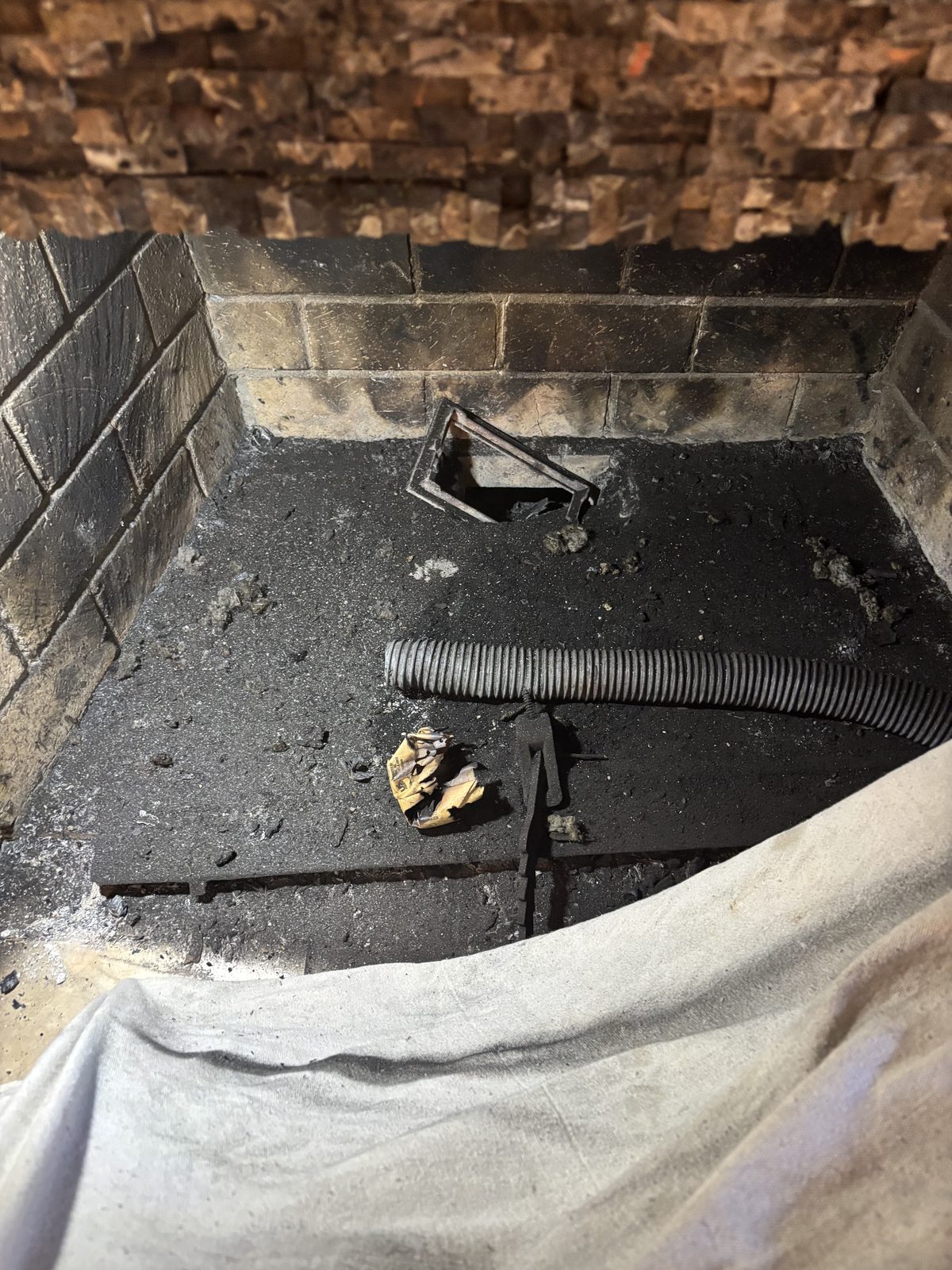 Before cleaning
How often should you have your chimney cleaned?
Cleaning frequency depends on the fuel type your system burns:
- Wood-burning systems: once or twice per year depending on usage. Heavier use or burning green wood may require more frequent cleaning.
- Oil flues: annually. Heavy soot buildup can indicate a problem with the furnace or boiler itself, and annual cleanings help catch it early.
- Gas systems: annually. Even though gas burns cleaner, gas flues should still be cleaned and inspected each year for blockages, corrosion, and operational issues.
Inspections and cleanings are most efficiently scheduled together. Chimspector's standard inspection is a Level 2 — a video scan of the flue is included — and if cleaning is also needed, both can typically be handled in a single appointment.
Signs your chimney needs cleaning
- A smoky smell in the home even when the fireplace is not in use
- Smoke backing up into the living space during a fire
- Reduced draft or poor airflow when the fireplace is in use
- Visible black or tarry deposits in the firebox
- More than a year has passed since the last professional cleaning
- You've been burning frequently, or burning unseasoned wood
What happens during a chimney sweeping?
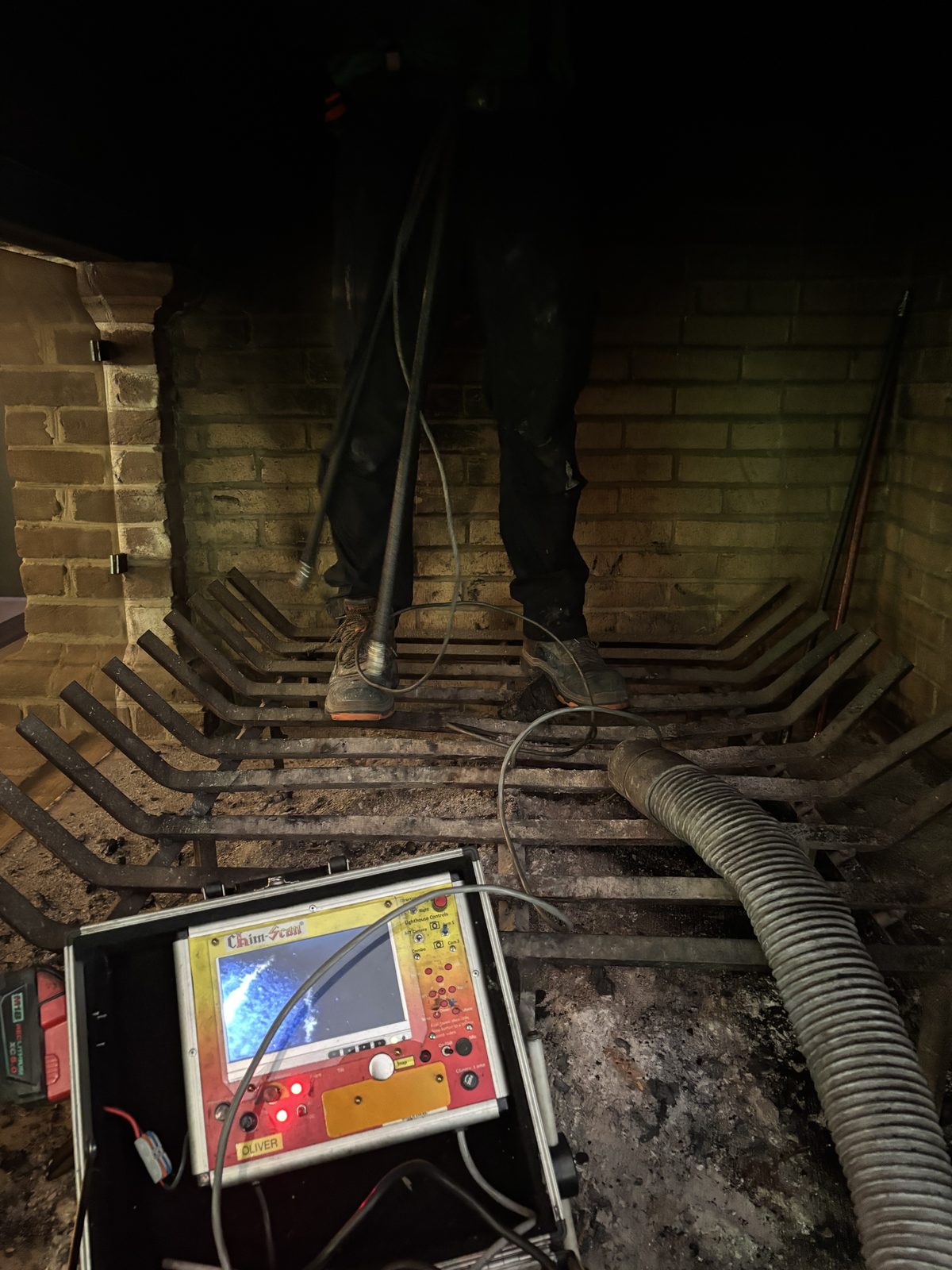
The purpose of a sweeping is to remove soot, blockages, creosote, and other buildup from the flue liner, firebox, smoke chamber, and damper. Chimspector uses specialized tools, brushes, and vacuums designed to complete the service without introducing soot into the home. During a sweeping, the technician will:
- Check the firebox for damaged brick or crumbling mortar
- Open the damper completely to confirm it moves freely and fits properly against the smoke shelf
- Inspect the damper for cracks, pitting, or rust
- Check for debris that would restrict airflow within the flue
- Remove creosote deposits that exceed the ~1/8 inch threshold recommended by NFPA 211
- Clear the smoke chamber and firebox of accumulated soot and residue
Can you clean a chimney yourself?
You can keep the firebox clear of ash and debris, and you can check that the damper opens fully. Sweeping the flue is a different job: it takes rotary rods sized to the liner, a HEPA vacuum to keep soot out of the house, and a look at the liner afterward to know whether the buildup came off or whether stage 2 or 3 creosote is still there. A professional sweep includes that check; a brush kit from the hardware store does not — and a half-cleaned flue is the one that looks fine from below.
PCR creosote removal: when standard sweeping isn't enough
For chimneys with more advanced accumulation, Chimspector uses PCR (Poultice Creosote Remover), a professional-grade chemical treatment. It's applied directly to the affected areas of the flue or smoke chamber; as it dries, it dissolves and absorbs the creosote, which falls away from the flue walls and into the firebox where it can be easily removed. This is safer and more effective for advanced buildup than mechanical removal alone, and it does not damage the chimney structure.
By the time PCR treatment or chain-cleaning methods are necessary, the chimney often warrants a closer look at the flue liner. Chimspector always recommends the approach that addresses the problem properly the first time — see chimney repair and relining — rather than a temporary solution that may require additional work later.
Do creosote sweeping logs work?
Partly. The chemical logs sold as "chimney cleaning logs" release a catalyst that can dry and loosen stage 1 creosote so more of it flakes off during normal fires. They do not remove anything — the loosened material still sits in the flue until it is swept — and they do nothing for tar-like stage 2 buildup or glazed stage 3 creosote, which is the dangerous kind. Used as directed they are harmless, and in a lightly used wood system they can make the annual sweep a little easier. They are not a substitute for it, and a log can't tell you whether the liner underneath is cracked.
How much does a chimney sweep cost?
The office quotes the sweep when you book; what moves the number is the condition of the system, not the brand of brush. A routine annual service on a well-kept wood or gas system is the simplest visit. The price rises with the stage of creosote (glazed buildup needs PCR treatment and more time), the number of flues, whether the sweep is combined with a Level 2 inspection (usually the better value, since the scan confirms the liner is clean and intact), and access — tall or steep roofs take longer. Adding a dryer vent cleaning to the same visit costs less than a separate trip.
When you’re ready, Chimspector’s chimney sweeping team serves South Carolina and Western North Carolina.